The dicrotic notch: what the small dip on the arterial curve means
Every beat on an arterial line has a small notch on the way down. It is easy to ignore, but it marks the moment the aortic valve closes, and its shape says a fair bit about both the patient and the line itself.
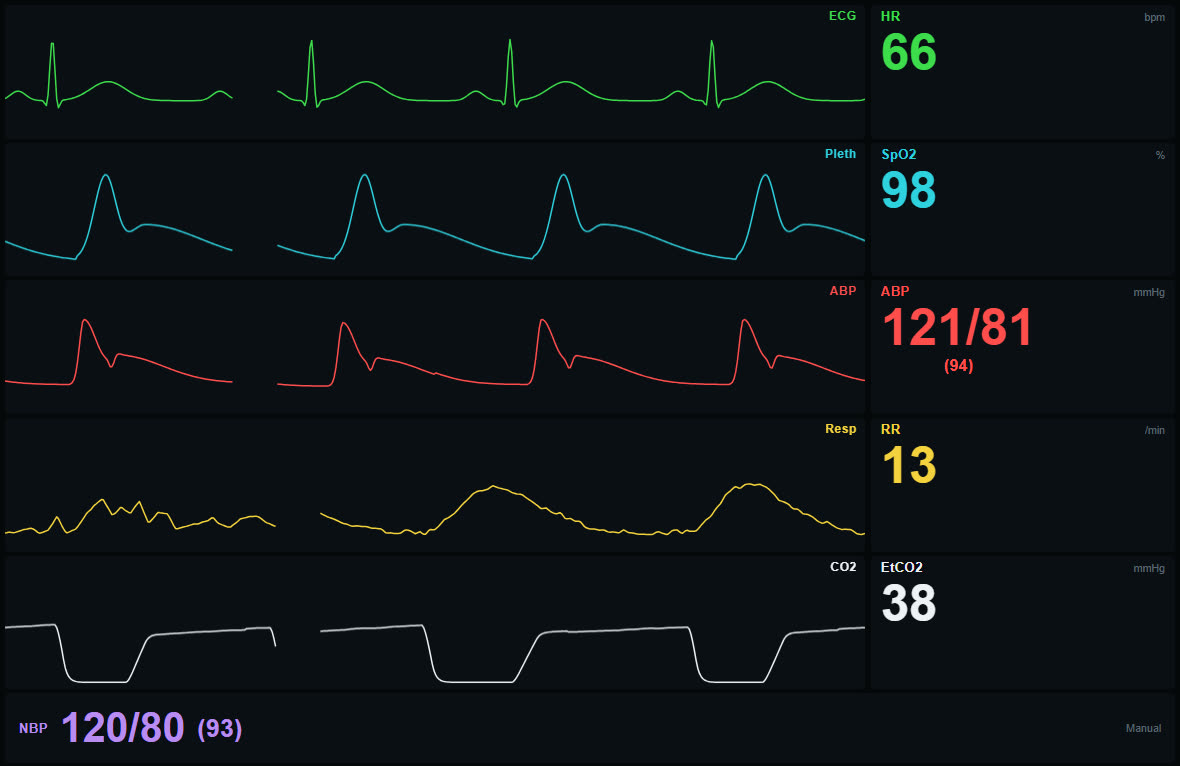
What the dicrotic notch is
The dicrotic notch, also called the incisura, is the small dip on the falling side of the arterial pressure curve. Everything before it is systole, when the left ventricle is ejecting blood. Everything after it is diastole, when the valve is shut and pressure in the arteries slowly falls as blood runs out into the tissues.
Why it appears
When the ventricle stops ejecting, pressure in the aorta is briefly higher than in the ventricle. A small amount of blood starts to flow back towards the heart and snaps the aortic valve shut. That short backflow and the recoil of the closed valve show up as a dip followed by a small bump.
Out in the radial artery, where most arterial lines sit, the curve looks different from the aorta. The systolic peak gets taller and narrower, and pressure waves reflected back from smaller arteries shape what follows. The notch therefore sits a little later and lower, and is less sharp, than it would be close to the heart.
What its position and shape tell you
- High on the downstroke: often seen with high vascular resistance, when the arteries are constricted.
- Low on the downstroke: often seen with low resistance, for example in sepsis or after vasodilating drugs.
- Blurred or missing: usually technical. An air bubble, a clot, a kinked line or a loose connection damps the signal. The curve turns soft and rounded, systolic reads too low and diastolic too high. Very low pressure, a very fast heart rate and aortic regurgitation can also wash it out.
- Exaggerated, with extra ripples: an underdamped system that rings. The systolic value is then overestimated.
Checking the line with a flush test
A quick way to tell a patient problem from a line problem is the fast-flush test, sometimes called the square wave test. Pull the flush device and let go. A well set-up system shows a square wave followed by one or two quick oscillations, then the normal curve with its notch. Many oscillations mean the system is underdamped. A slow, sluggish return with no oscillation means it is overdamped, and in that case the missing notch says more about the tubing than about the patient. More on why cuff and arterial readings differ in NBP vs ABP.
A notch on the pleth curve too
The pulse oximeter's pleth curve often has a notch of its own. It comes from the same events but is softer, and it is one of the first things to fade when the patient becomes vasoconstricted or the fingers get cold. A pleth curve that loses its notch and flattens out is a perfusion warning worth taking seriously, even when the SpO2 number still looks fine. The SpO2 page shows how that looks.
How the simulator draws it
The arterial curve in this simulator is not a fixed picture. It is built as a forward systolic wave plus a reflected wave, and the notch appears in the gap between them, with a narrow extra dip at valve closure. As the heart rate climbs, diastole gets shorter and the notch moves with it. In pulseless rhythms the curve goes flat. The arterial line page has the details.
Frequently asked questions
What does the dicrotic notch represent?
The closing of the aortic valve. It separates systole, before the notch, from diastole, after it.
Why is there no dicrotic notch on the arterial line?
Most often the line is damped by an air bubble, a clot or a kink. Very low blood pressure, a very fast heart rate or aortic regurgitation can also make it disappear. A flush test helps tell the two apart.
Is the dicrotic notch part of systole or diastole?
It marks the boundary. Ejection ends just before it, and diastole starts with it.
Last updated